RFID or app: how to authorise EV charging
4 min read

5 min readupdated
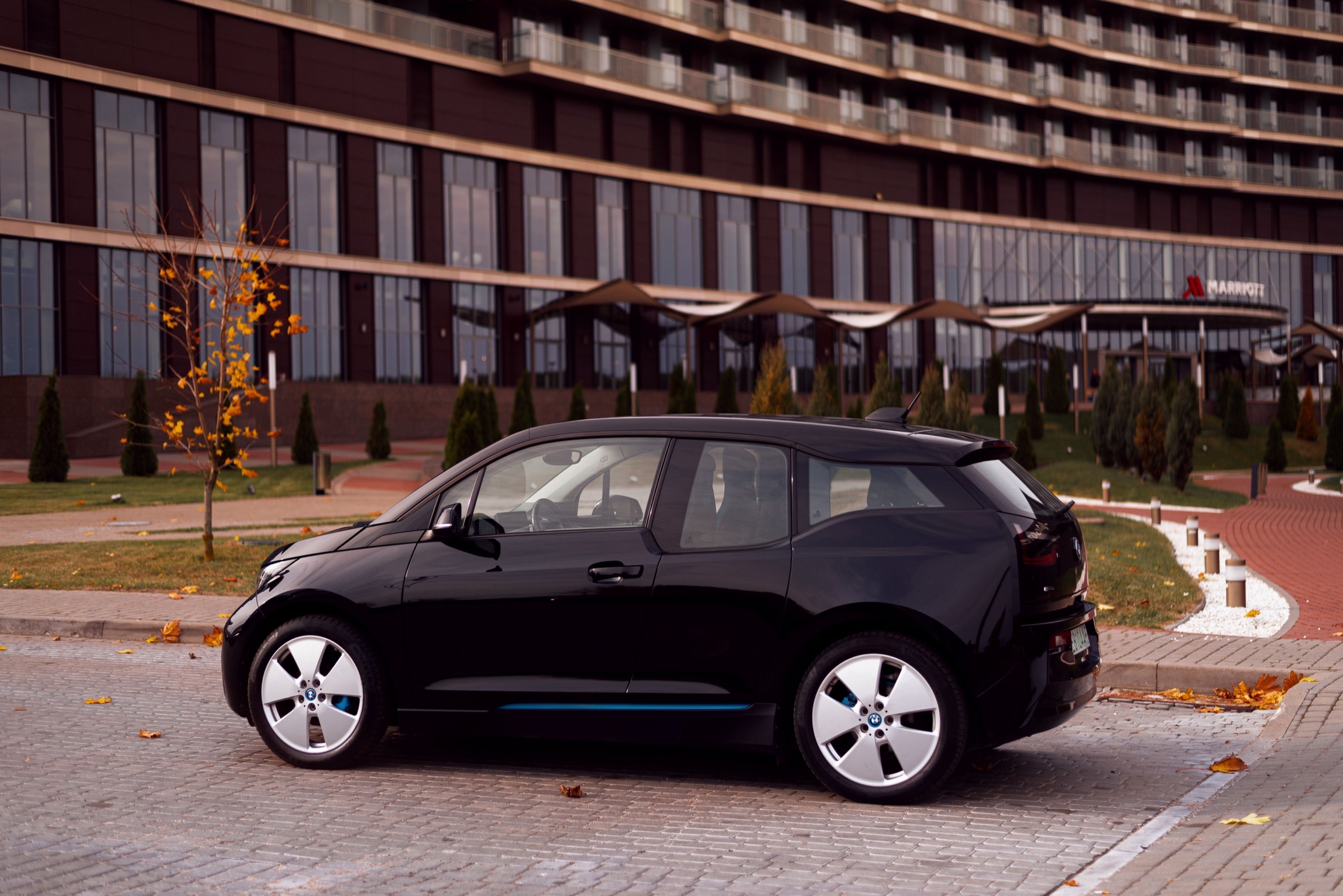 Fot. Vitali Adutskevich
EV drivers increasingly choose where to stay so that they can hit the road in the morning with a full battery. A hotel EV charger is no longer a novelty — it is an amenity guests ask about when booking. We explain how many points and what power a hotel needs, how to run the service without involving reception, how to add charging to the room bill and what formalities apply in Poland.
Hotel guests leave their car for many hours, usually overnight. That is why 11 kW AC chargers (and often even 7.4 kW) are more than enough in a hotel: over 8–10 hours of parking, they will fully charge the battery of most cars. Fast DC chargers are many times more expensive and make more sense for properties on main routes, where guests stop for an hour, e.g. for lunch.
Two to four points are usually enough to start with, and it is worth designing the installation with headroom for more from the outset. Dynamic load management (load balancing) shares the available power among the cars charging at any given moment and takes into account the consumption of the kitchen, air conditioning or spa — so additional chargers do not immediately require increasing the hotel’s connection capacity.
We confirm the number of points and the available power after analysing the grid connection and installation of the specific property.
The most important rule: charging must not add work for reception. The Domena Power system lets you choose the authorisation method that suits the property:
The most convenient model for guests is charging added to their stay. We integrate the system with hotel software (PMS) and billing systems, including Betasi. The session is assigned to the room and booking, and the cost appears on the bill together with the accommodation, breakfast or parking — the guest pays once, at check-out.
This is how it works, for example, at the athotel35 hotel in Słupca: guests have 4 charging spaces available, authorise with their room key card, and billing is fully automated, together with the hotel’s other services.
The hotel is its own charging operator and sets the rules itself. In practice, there are three approaches:
Example: 4 chargers, 60 sessions a month averaging 30 kWh each, gives 1,800 kWh. With the hotel’s energy cost at approx. 1.00 zł/kWh and a guest rate of 2.00 zł/kWh, charging revenue is 3,600 zł and the surplus over the energy cost is 1,800 zł a month.
The Domena Power subscription for 4 chargers is 60 zł net per month (30 zł for the first and 10 zł for each additional one), and the first M2M SIM card is included. We take no commission on energy sales, so the entire surplus stays with the hotel — on a public network charging a 20% commission, the intermediary would take 720 zł a month in this example.
This calculation is illustrative: the energy cost depends on the hotel’s tariff, and the number of sessions on occupancy and guest profile. You can calculate the system cost for your number of chargers in the calculator below.
The scope of formalities and the VAT treatment of charging depend on how the chargers are made available and should be confirmed for the specific property. We handle them as part of the rollout.
If the hotel already has chargers that support the OCPP protocol, they usually do not need to be replaced — we connect them to the system regardless of the manufacturer.
We will work out the net and gross amount incl. 23% VAT for your number of chargers.
Number of chargers (sockets)
First socket 30 zł, each additional +10 zł net/month.
External connectivity (LTE SIM cards)
When the charger has no access to the site internet. First card free, each additional +10 zł net/month.
We handle the entire process turnkey — see how we can help:
4 min read
5 min read
4 min read
4 min read
Call or write — we’ll answer your questions about assessment, installation and charger billing. You can also leave an enquiry in the form beside this.