EV charger power: 11 kW or 22 kW?
4 min read

4 min readupdated
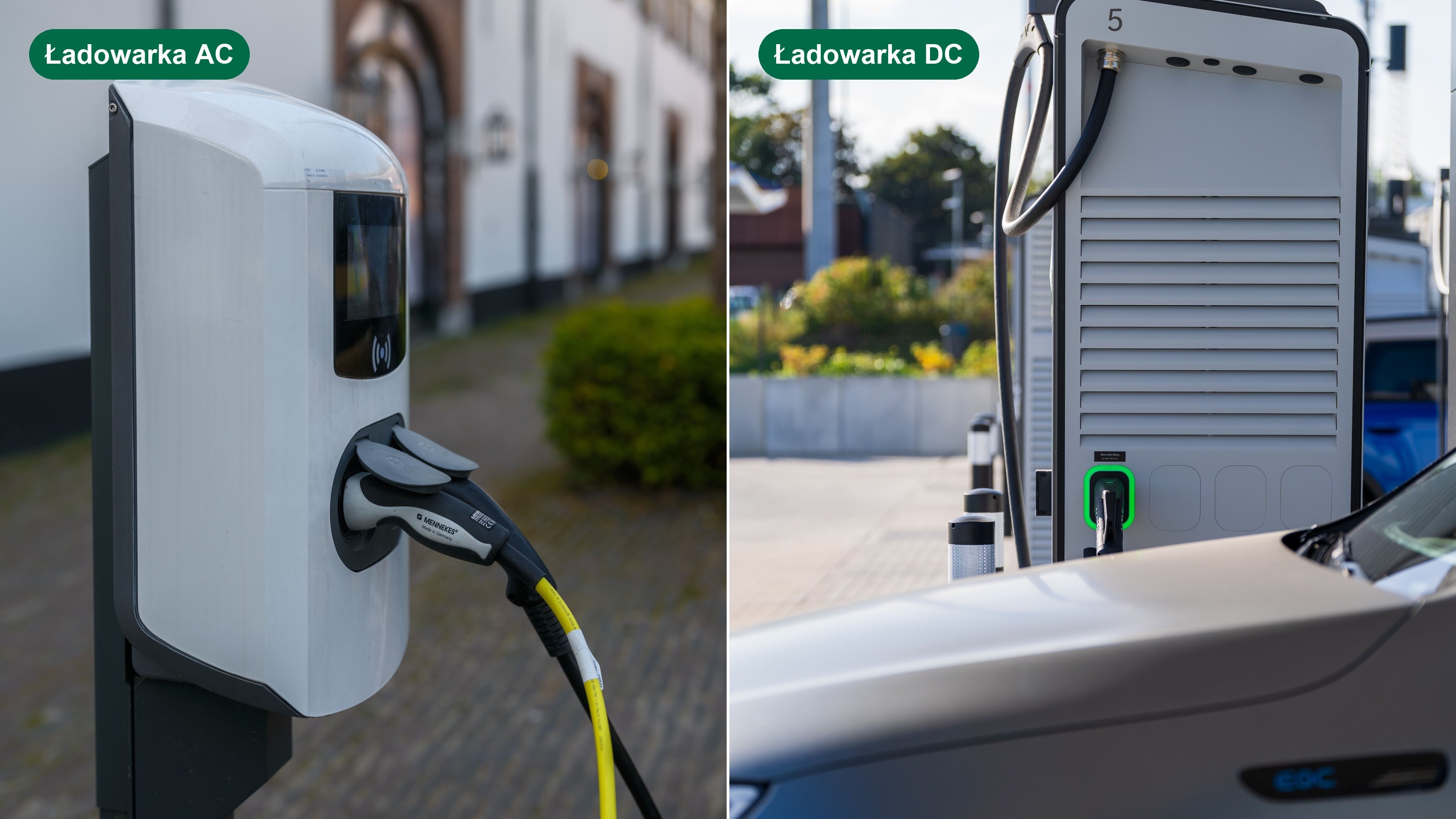 Fot. Haberdoedas, Mohamed B
AC or DC charger? These are two different approaches to charging: slower, cheaper destination charging, or fast charging in a few dozen minutes but at a price many times higher. In residential buildings, offices and hotels, AC almost always does the job. We explain the differences, show real charging times and advise when DC is worth considering.
An electric car’s battery is charged with direct current (DC). An AC charger supplies alternating current to the car, and the car’s on-board charger converts it to direct current. It is the on-board charger that limits the power — most often to 7.4 or 11 kW, less often to 22 kW.
A DC charger has a built-in rectifier and delivers direct current straight to the battery, bypassing the on-board charger. That is why it charges much faster — at 50, 150 kW or more — but it is larger, more expensive and needs much greater connection capacity.
Charging times are indicative: they depend on the maximum power the car can accept, the temperature and the condition of the battery. Device prices depend on the manufacturer and specification.
AC is a solution for destination charging — where the car is parked for several hours anyway. In an apartment block you charge overnight, at the office during working hours, at a hotel during the guest’s stay. Even 7.4 kW is entirely sufficient to have a charged battery in the morning.
DC makes sense where cars are parked briefly and vehicle turnover matters: at commercial car parks, retail and food-service sites, at depots for high-mileage fleets, or at stations along main routes. Before a decision is made, you need to check the available connection capacity and the cost of increasing it — often that, rather than the charger itself, determines whether it pays off.
At many sites, a mixed model works well: several AC chargers for destination charging and one DC charger for fast top-ups.
Whatever you choose, it is worth connecting the chargers to a single management system. Domena Power works with AC and DC devices that support the OCPP protocol, regardless of manufacturer: it authorises users in the app, calculates the session cost according to the site’s tariff and prepares reports for billing — with no commission on energy sales.
We handle the entire process turnkey — see how we can help:
4 min read
6 min read
4 min read
Call or write — we’ll answer your questions about assessment, installation and charger billing. You can also leave an enquiry in the form beside this.