A collective charger assessment for your community
2 min read

3 min readupdated
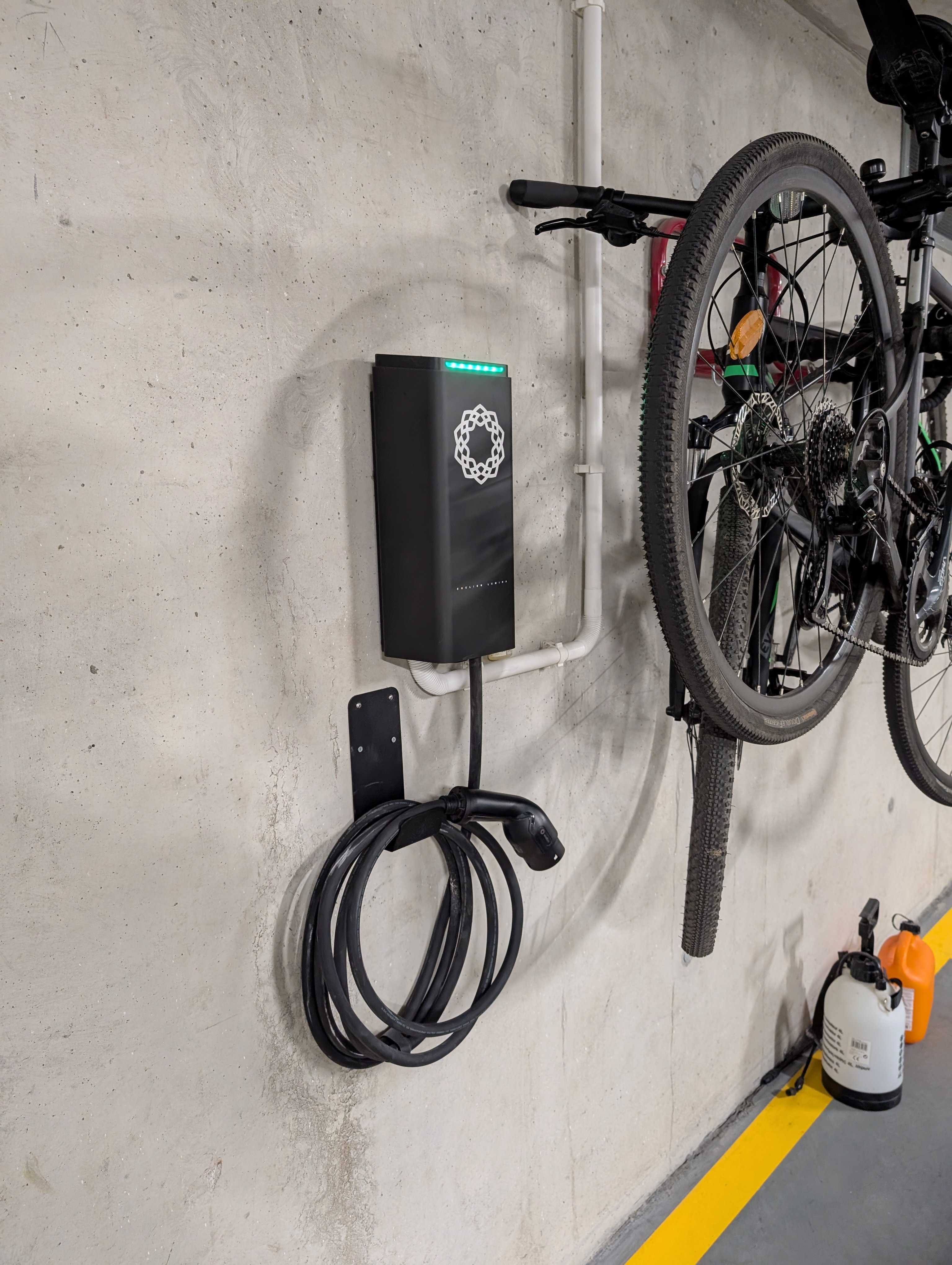
As more electric cars appear in an apartment block, it is tempting to let everyone “sort it out themselves”: a separate connection or circuit for each individual charger. In a multi-family building, this is usually the more expensive, slower route — and one that quickly ends in “no power available”. The alternative is a single collective design with dynamic load balancing (DLB) for the whole building.
Chargers can be introduced in a multi-family building in two ways. The first is separate connections or circuits for individual residents, each with its own documentation. The second is one collective assessment and design for the whole building, with an installation prepared for the target number of points and a system that shares the available power between cars. The difference in cost and convenience can be huge.
The “one point at a time” approach looks simple, but at building scale it quickly backfires:
Dynamic load balancing (DLB) is at the heart of the collective solution. Instead of reserving full power for each charger, the system shares the available power between the points that are actually charging at any given moment. When one car is charging, it gets more; when several are — the power is split between them without exceeding the installation limit.
As a result, the same connection can support many times more points than with a rigid allocation, without costly increases to the building’s connection capacity. More advanced versions also take into account the current consumption of the whole building (lifts, lighting in common areas) and protect the installation from overload at peak times.
The scope of requirements (including power headroom and fire safety) depends on the specific building. We confirm it after analysing the installation.
A collective assessment with DLB means more chargers on the existing connection, a lower cost per point, orderly formalities and a safe installation — while each resident still pays only for their own sessions. At Domena Power, we run such a project end to end: from the collective assessment and design, through installation and DLB, to a commission-free billing system.
Enter the number of charging points and we will calculate the net and gross amount incl. 23% VAT.
Additional points within a single documentation set are cheaper: the first point is the full assessment and design, and each further one is only +330 zł net — the more points, the lower the cost per point.
Number of charging points
First point 3000 zł, each additional +330 zł net.
* Applies to connection to the building’s existing distribution board, provided the full required electrical documentation and floor plans are supplied.
We handle the entire process turnkey — see how we can help:
2 min read
4 min read
4 min read
2 min read
Call or write — we’ll answer your questions about assessment, installation and charger billing. You can also leave an enquiry in the form beside this.