Fire-safety opinion and UDT inspection: when required
4 min read

4 min readupdated
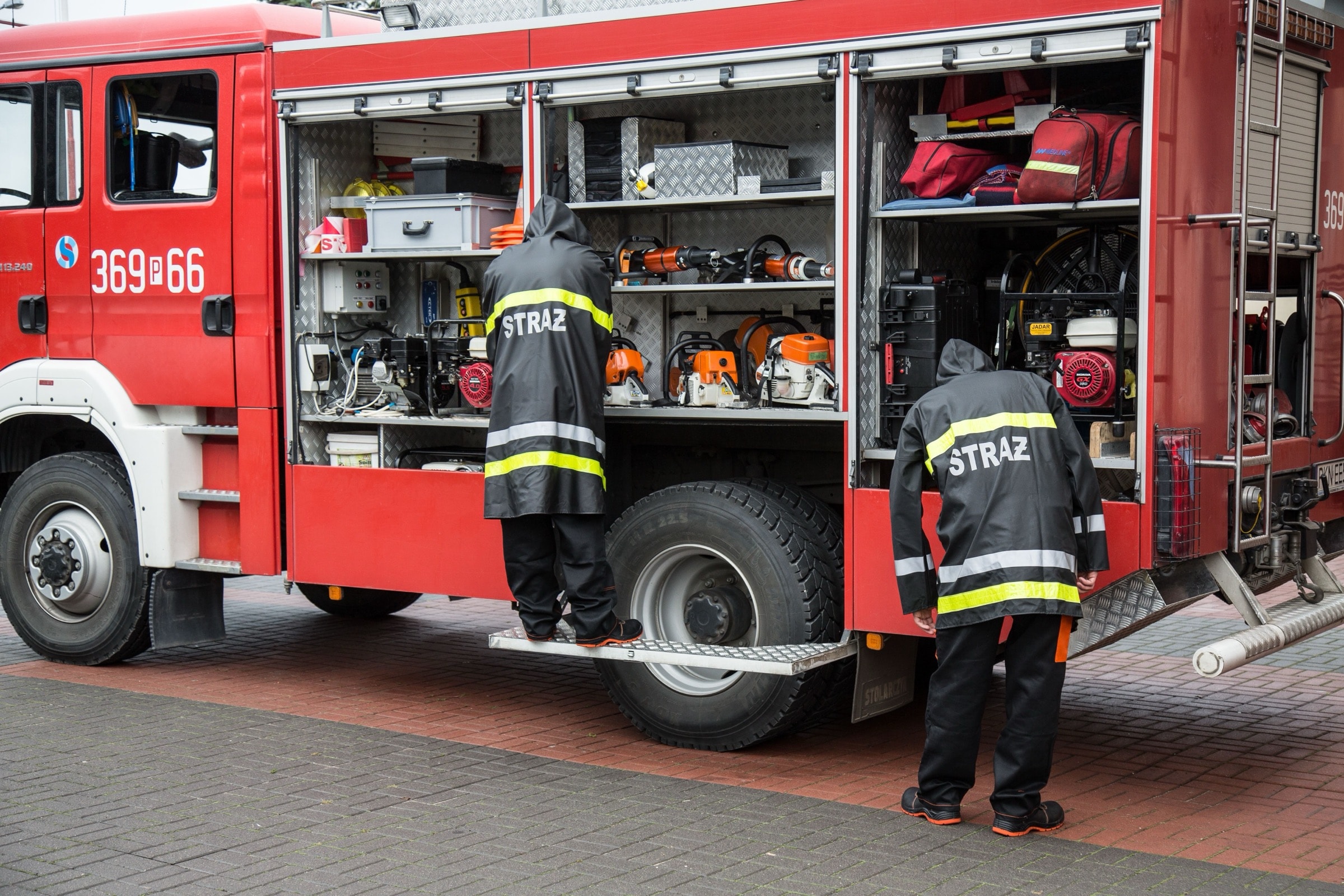 Fot. Marianna Zuzanna
An underground garage is where installing chargers raises the most questions about fire safety — among residents and property managers alike. In practice, a well-designed installation rarely requires major changes to the building. We explain where the concerns come from, what a certified fire-safety expert checks, how chargers are disconnected when the alarm goes off and what to do to make charging in a garage safe.
Available analyses do not show that electric cars catch fire more often than combustion-engine cars. The difference lies in how the fire develops: a damaged lithium-ion battery can go into uncontrolled heating (thermal runaway), burns for a long time, gives off large amounts of toxic gases, can be difficult to extinguish and may reignite after being put out.
In an enclosed garage, this makes the fire brigade’s job harder. That is why the aim of the design is not to “ban electric cars” but to limit risk on the charging installation side and give rescuers safe conditions to work in: the ability to cut off power quickly, clear signage and access to the charging bays.
In Poland, the design of a charging installation in an enclosed garage is approved by a certified fire-safety expert (rzeczoznawca ds. zabezpieczeń przeciwpożarowych). They assess whether the new installation worsens the building’s fire-safety conditions:
Once the fire protection system is triggered, the charging stations must be disconnected. In a building this is done globally — the chargers are switched off together with the entire fire zone, not one by one. In garages with a fire alarm system, the chargers’ power supply is usually cut automatically after an alarm, and independently of that it can be disconnected with the fire-fighter’s power cut-off switch.
Individual emergency stop switches at each charger are usually used for outdoor stations outside the building.
Most charging-related hazards can be mitigated on the installation side. In a multi-space garage this means:
In the vast majority of cases, the expert does not impose significant additional requirements on the building. The recommendations most often cover linking the chargers to the fire alarm system or the fire-fighter’s power cut-off switch, the location of the points, signage and an update of the fire safety instructions. Less often — additional firefighting equipment or changes to ventilation and smoke extraction.
The expert’s opinion and the approved design are also part of the documentation needed when the station is subject to inspection by UDT (Poland’s Office of Technical Inspection).
The scope of requirements depends on the specific building and current regulations — we confirm it individually after analysing the building.
Enter the number of charging points and we will calculate the net and gross amount incl. 23% VAT.
Additional points within a single documentation set are cheaper: the first point is the full assessment and design, and each further one is only +330 zł net — the more points, the lower the cost per point.
Number of charging points
First point 3000 zł, each additional +330 zł net.
* Applies to connection to the building’s existing distribution board, provided the full required electrical documentation and floor plans are supplied.
We handle the entire process turnkey — see how we can help:
4 min read
2 min read
4 min read
8 min read
Call or write — we’ll answer your questions about assessment, installation and charger billing. You can also leave an enquiry in the form beside this.