Domena Power
Safety and inspections

Fire-safety opinion and UDT inspection: when required

4 min readupdated

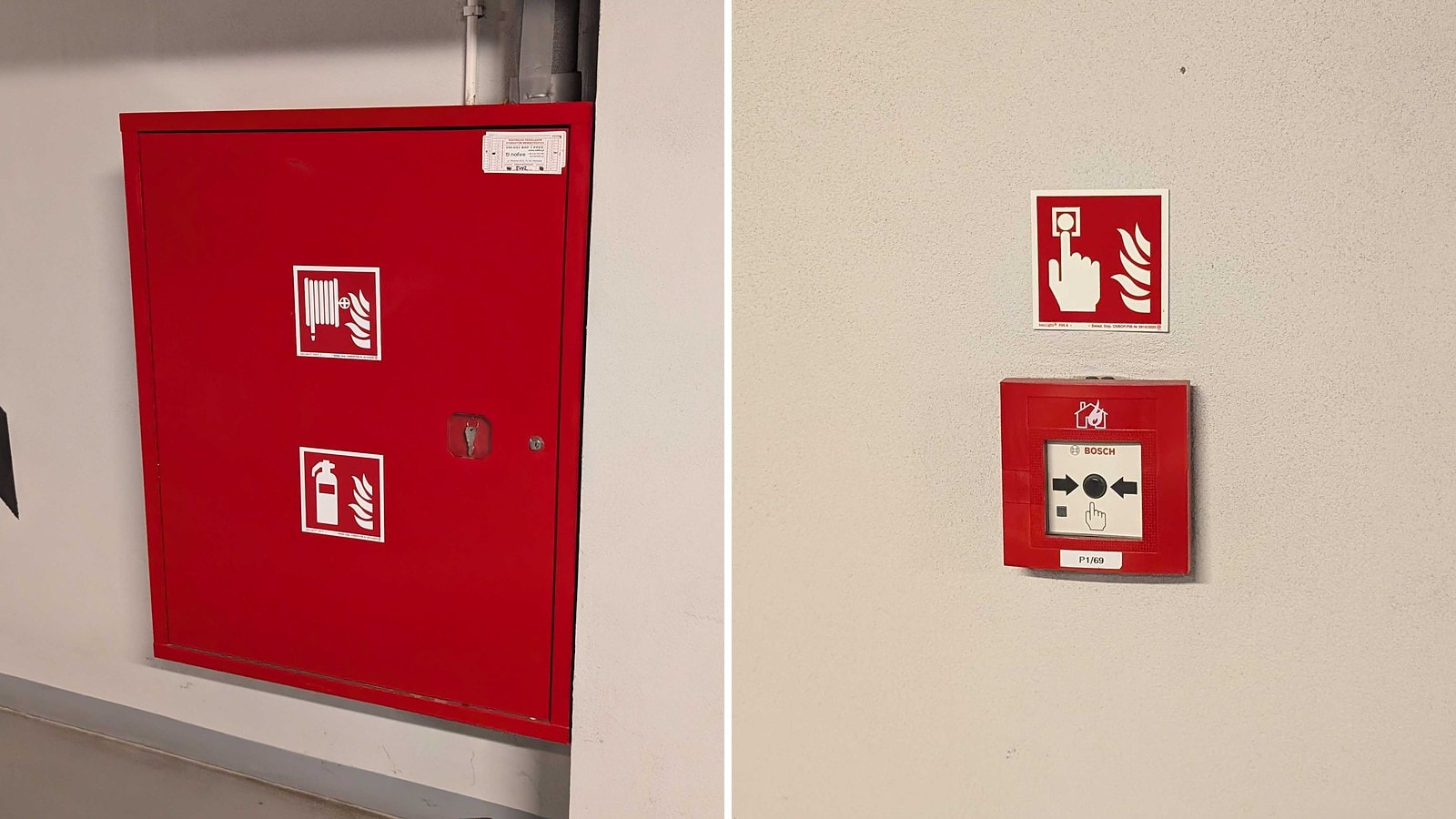
An indoor fire hydrant and a manual call point (ROP) in an underground car park

Fire safety and formal acceptance are the two questions that most often hold back housing communities and property managers from installing chargers. They are two separate matters: the fire-safety assessment concerns the building and its installation, while the UDT inspection (by Poland’s Office of Technical Inspection) concerns the charging station itself and how it is made available. We explain when each is required and how the whole process works in Poland.

When a fire-safety assessment is needed

A fire-safety assessment evaluates whether the charging installation worsens the building’s fire-safety conditions — particularly in enclosed and underground car parks. Its scope depends on the site, the number of points, the power and the existing safety systems.

The installation design is signed off by a fire-safety expert. Among other things, they check the use of a fire disconnect switch (PWP), integration with the fire alarm and smoke extraction systems, preservation of the fire zone division, and the location of chargers in relation to escape routes.

  • Usually needed: underground and enclosed car parks, multi-family buildings, office buildings and sites with multiple charging points.
  • Usually needed: when the installation changes fire-protection conditions — e.g. a new supply line runs through fire zones, or chargers are to be disconnected by a signal from the fire alarm system.
  • Most often not needed: a single wallbox in the garage or on the property of a detached house.

What the assessment most often requires

  • Disconnecting the chargers’ power supply with the fire disconnect switch — together with the fire zone or via a separate circuit.
  • Control from the fire alarm system: after an alarm, chargers in the car park are switched off automatically.
  • Location of charging points: away from escape routes and exits, ideally close to the car park entrance.
  • Signage for charging spaces and switches, and an update of the building’s fire-safety instructions.
  • Less often: additional firefighting equipment or changes to the ventilation and smoke extraction system — depending on the building.

UDT inspection: which stations are subject to it

UDT technical inspections apply to charging stations within the meaning of the Electromobility Act — both publicly accessible and non-public ones, if they are used to provide a charging service. So the obligation is not determined by the type of building itself, but by whether the station is public or whether a fee is charged for charging.

The initial inspection is carried out before the station is put into operation — the station may only operate on the basis of a UDT decision. A repeat inspection may be required, among other things, after a repair, an upgrade, an increase in the number of charging points or a change in their location. Not every private charger is automatically subject to a mandatory UDT inspection.

  • Subject to inspection: a publicly accessible station, available to any driver.
  • Subject to inspection: a station in a closed system, if a charging service is provided on it — e.g. paid charging for residents, tenants or hotel guests.
  • Not subject to inspection: a private wallbox used for your own needs, without providing a charging service to others.

How the process works step by step

  • Site analysis: connection capacity, charger locations, fire zones and existing fire-safety systems.
  • Installation design and its sign-off by a fire-safety expert.
  • Installation of chargers, protective devices and any links to the fire alarm system.
  • Electrical testing and post-installation reports.
  • Preparation of the documentation and the UDT application — when the station is subject to inspection.
  • UDT inspection and a decision authorising operation, followed by commissioning of the station.

Which documents you should have

  • The installation design signed off by a fire-safety expert (when required).
  • Electrical test reports: protection against electric shock, insulation resistance, earth fault loop impedance, RCD operation.
  • Technical documentation and declarations of conformity for the chargers.
  • Documentation for the UDT inspection and the decision authorising operation (where applicable).
  • Updated fire-safety instructions for the building.

How we handle it turnkey

At Domena Power, we guide clients through the whole process: from site analysis, the assessment and design, through installation and testing, to preparing the UDT documentation, the billing system and service. This way, fire-safety and UDT formalities are part of a single deployment rather than a separate problem for the property manager.

The scope of the assessment and whether the station is subject to UDT inspection depend on the site and how the chargers are made available. We confirm them after analysing the specific installation.

Calculate the cost of your documentation

Enter the number of charging points and we will calculate the net and gross amount incl. 23% VAT.

Additional points within a single documentation set are cheaper: the first point is the full assessment and design, and each further one is only +330 zł net — the more points, the lower the cost per point.

Number of charging points

First point 3000 zł, each additional +330 zł net.

1
Assessment and design3 000 zł netto
VAT 23%690 zł
Razem brutto3 690 zł z VAT 23%
Book an assessment

* Applies to connection to the building’s existing distribution board, provided the full required electrical documentation and floor plans are supplied.

Frequently asked questions

  • No. It is usually required for underground and enclosed car parks, multi-family buildings and sites with multiple charging points. For a single wallbox at a detached house, it is most often not needed.

Related services

We handle the entire process turnkey — see how we can help:

Sources

Read also

Have a question about charging at your property?

Let’s talk

Let’s talk about working together

Call or write — we’ll answer your questions about assessment, installation and charger billing. You can also leave an enquiry in the form beside this.

I am interested in:

You can select several options.

Provide it if you are enquiring on behalf of a housing community or company. Individual clients can leave it blank.

Leave a number if you prefer a call. Otherwise we will reply by e-mail.

Tell us about the project: type of property, number of charging points, location. It helps us prepare a quote.