EV charger load balancing: power management
4 min read

5 min readupdated
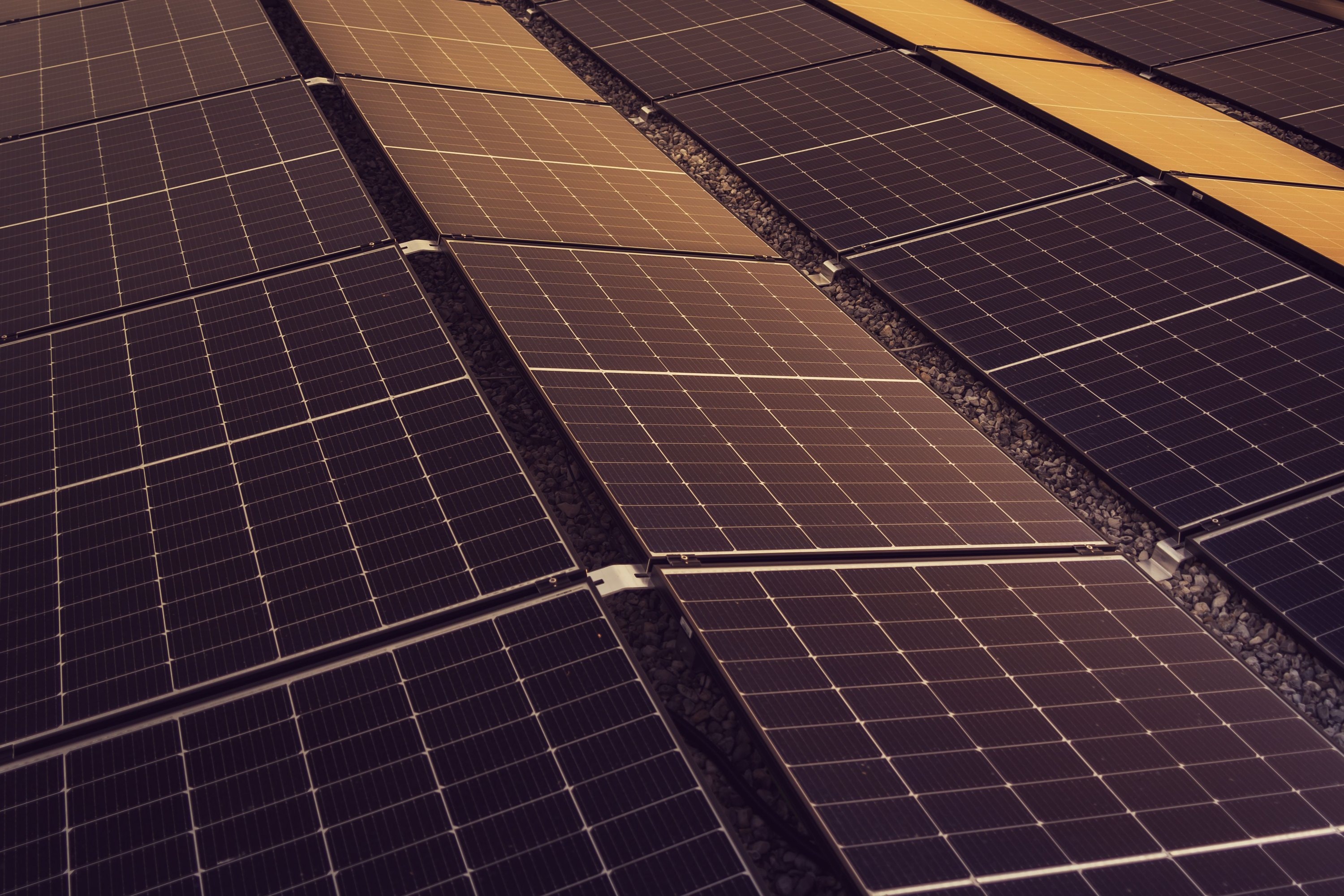 Fot. Michael Pointner
More and more housing communities and co-ops in Poland have rooftop photovoltaics (PV) supplying the building’s common areas. On sunny days, the installation produces more than the building uses, and the surplus is exported to the grid for a fraction of the price the community pays for the energy it buys. A group of chargers connected to the same installation lets you use that energy on site. We explain how it works, how much you can gain and what to bear in mind when designing it.
Under Poland’s net-billing system, energy exported to the grid is settled at the market price, which in the middle of a sunny day can be very low — and is sometimes even negative. Energy bought in the evening and at night, on the other hand, is paid for by the housing community at the full price, including distribution charges. The difference can be several-fold.
That is why every kilowatt-hour from the roof used on site is worth far more to the housing community than one sold to the grid. The higher the self-consumption, the faster the PV investment pays for itself.
The building’s common areas — lighting, lifts, garage ventilation — use little energy during the day. An electric car is the opposite: a large, flexible load that can take several dozen kWh in a few hours. Chargers connected behind the same meter as the PV installation use up the surplus before it reaches the grid.
A single charger can only absorb surplus energy when a car happens to be plugged into it. A group of chargers with dynamic load balancing (DLB) spreads the available power across all cars charging at a given moment, so the energy from the roof is used much more fully. Shared infrastructure is also easy to expand with more points as the number of electric cars grows.
A housing community has a 25 kWp rooftop installation, which in Poland produces approx. 25,000 kWh a year. Over the year, the chargers use 5,000 kWh of this energy — about one fifth of production — which would otherwise have been exported to the grid. If purchased energy costs the community approx. 1.00 zł/kWh and exported energy is settled at approx. 0.25 zł/kWh, every kWh used on site is worth approx. 0.75 zł. With 5,000 kWh, that is approx. 3,750 zł a year.
Illustrative calculation: the result depends on the PV installation’s capacity, energy prices, the tariff and how many cars charge during the day. We estimate the self-consumption potential individually for each building.
The challenge is that PV produces energy during the day, while residents charge their cars mainly at night. During the day, however, the car park holds the cars of people working from home, retirees, second family cars and vehicles belonging to businesses renting commercial units. It is worth giving them a reason to charge at exactly that time:
Domena Power guides the housing community through the entire process — from checking how much rooftop energy can be used for charging to a system that bills residents automatically. One partner, one design and one point of responsibility:
Want to find out how much your housing community could gain from solar PV and chargers? Book a free consultation — you can calculate the cost of the billing system right away in the calculator below.
We will work out the net and gross amount incl. 23% VAT for your number of chargers.
Number of chargers (sockets)
First socket 30 zł, each additional +10 zł net/month.
External connectivity (LTE SIM cards)
When the charger has no access to the site internet. First card free, each additional +10 zł net/month.
We handle the entire process turnkey — see how we can help:
4 min read
4 min read
8 min read
Call or write — we’ll answer your questions about assessment, installation and charger billing. You can also leave an enquiry in the form beside this.