Your own charging operator: billing with no commission
5 min read

8 min readupdated
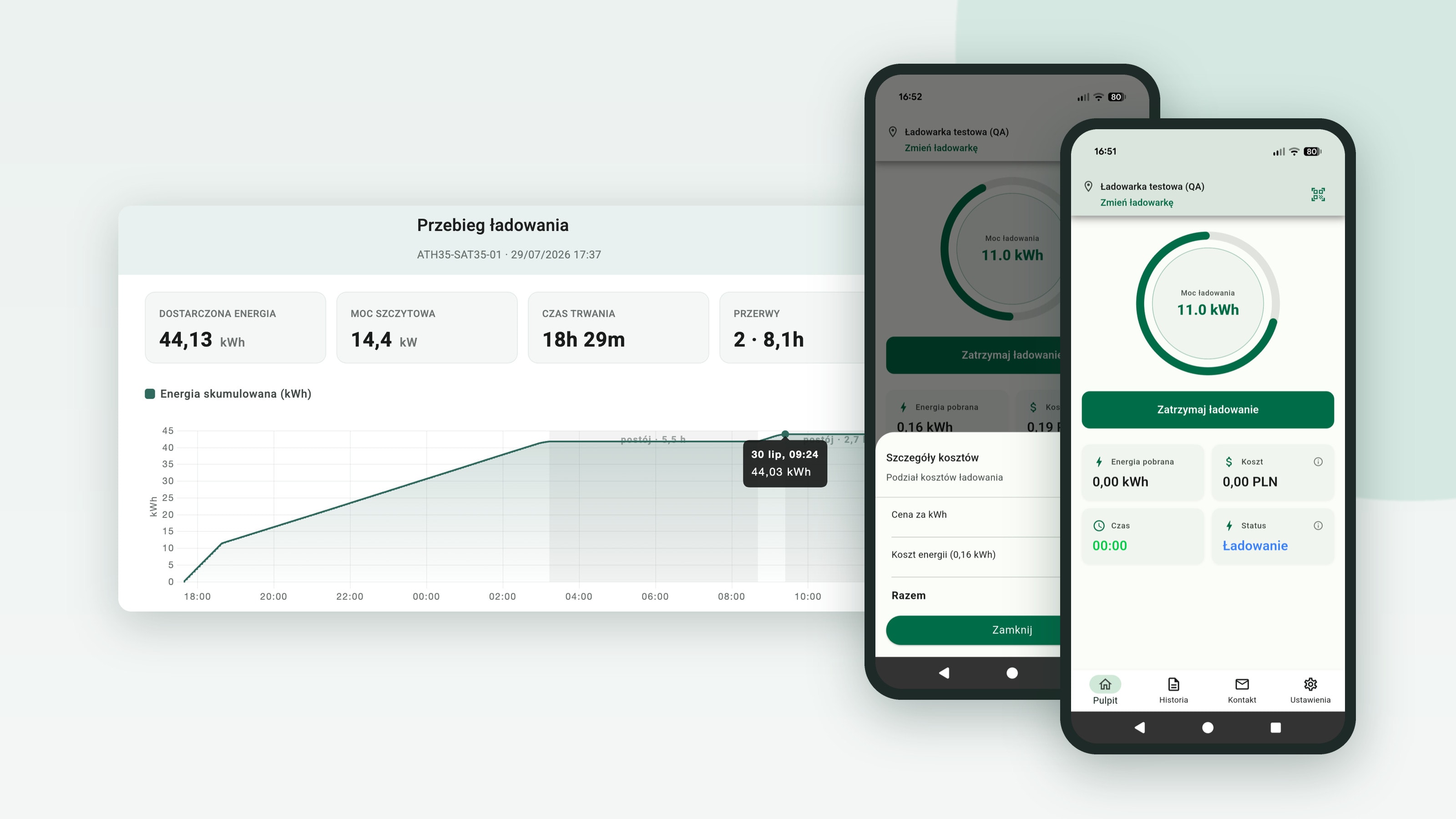
The most common concern of a housing community board is: “residents with electric cars are charging, and all of us are paying for the common-area electricity”. This is a real risk when chargers operate without billing or on a flat fee. The solution is to meter every session and assign it to a specific resident. Below, we compare billing models, show how to set the per-kWh rate and how to charge unit owners — and how the Domena Power system handles all of it.
Chargers in an association’s garage or car park are usually supplied from the common-area meter. The association pays the energy bill, and its cost is spread across all units — including those without an electric car.
The problem arises when the chargers lack MID-certified submeters, which allow consumption to be measured reliably, as well as an access and charger management system. Without them, anyone can plug in a car, nobody knows who used how much energy, and the association has no grounds to charge the costs to unit owners.
The scale grows quickly: one electric car often uses 150–300 kWh a month. Five cars at 250 kWh each is 1,250 kWh, which at an energy cost of around 1 zł/kWh means over 1,200 zł a month that, without billing, is covered by all unit owners.
Illustrative calculation: the actual cost of 1 kWh depends on the association’s tariff and contract, and consumption depends on the number of cars and how they are used.
Associations usually use one of three models. With more than one charger, we recommend the last one — per-session billing: it is fair, scales with the number of cars and doesn’t burden the property manager with copying meter readings every month.
An association can hand its chargers over to an external charging network to manage or bill them in its own in-house system. At first glance, both do the same thing — meter energy and calculate charges. But they differ in who sets the rules and who keeps the money.
The public operator model makes sense in a publicly accessible car park, where revenue from outside drivers is an end in itself. In a housing community, it works against residents: they pay a higher rate than the real cost of energy, and the difference goes to an intermediary instead of staying with the association.
Example: five cars draw a total of 1,250 kWh a month, and the rate for drivers is 1.50 zł/kWh. That is 1,875 zł a month. With a 20% commission, the operator keeps 375 zł a month, or 4,500 zł a year — and this amount grows with every additional electric car in the building. The Domena Power in-house system for 6 chargers costs a flat 80 zł net a month, regardless of the number of kWh.
Illustrative calculation: the commission and rates depend on the specific operator and contract, and consumption depends on the number of cars in the building.
Billing is based on knowing who started a session and how much energy they used. The charger communicates with the system via the OCPP protocol and sends energy readings, and the system assigns them to the logged-in user and unit.
Reliable billing requires chargers with MID-certified energy meters. Only then is the reading a credible basis for charging the unit owner, and it is easy to defend in the event of a complaint.
The second requirement is a convenient system, such as Domena Power, that collects readings remotely. The property administration doesn’t need to regularly visit the site and painstakingly write down meter readings — all the data is in the panel, assigned to specific units.
The rate for residents should correspond to the actual amount the association pays for 1 kWh. That way, nobody subsidises anyone else’s charging and the association doesn’t profit from residents. The rate is calculated from the bill for the meter that supplies the chargers.
How VAT is handled and how charging fees are documented depend on the association’s legal form and billing model — it is worth confirming this with your accountant.
In the Domena Power system, residents start and stop charging in the app. They see the charging power, energy used and session cost in real time, and after the session ends — a detailed cost breakdown and full charging history.
The property manager doesn’t have to issue or replace RFID cards, although the system supports them if the community prefers cards. They add a new person remotely in the panel and can revoke access at any time, e.g. after a unit is sold, without a service visit.
With a system, billing comes down to downloading a report and issuing debit notes — no trips to the garage and no manual meter reading. The process looks like this:
The Domena Power subscription is 30 zł net (36.90 zł gross) a month for the first charger in a group and 10 zł net (12.30 zł gross) for each additional one. The first M2M SIM card, providing connectivity even in an underground car park, is included. We take no commission on energy — the entire amount from billing stays with the association.
Example: with 6 chargers, the subscription is 80 zł net (98.40 zł gross) a month, regardless of how many kWh residents use. You can calculate the cost for your site in the calculator below.
We will work out the net and gross amount incl. 23% VAT for your number of chargers.
Number of chargers (sockets)
First socket 30 zł, each additional +10 zł net/month.
External connectivity (LTE SIM cards)
When the charger has no access to the site internet. First card free, each additional +10 zł net/month.
We handle the entire process turnkey — see how we can help:
5 min read
4 min read
5 min read
Call or write — we’ll answer your questions about assessment, installation and charger billing. You can also leave an enquiry in the form beside this.