AC or DC charger: which to choose for a building
4 min read

4 min readupdated
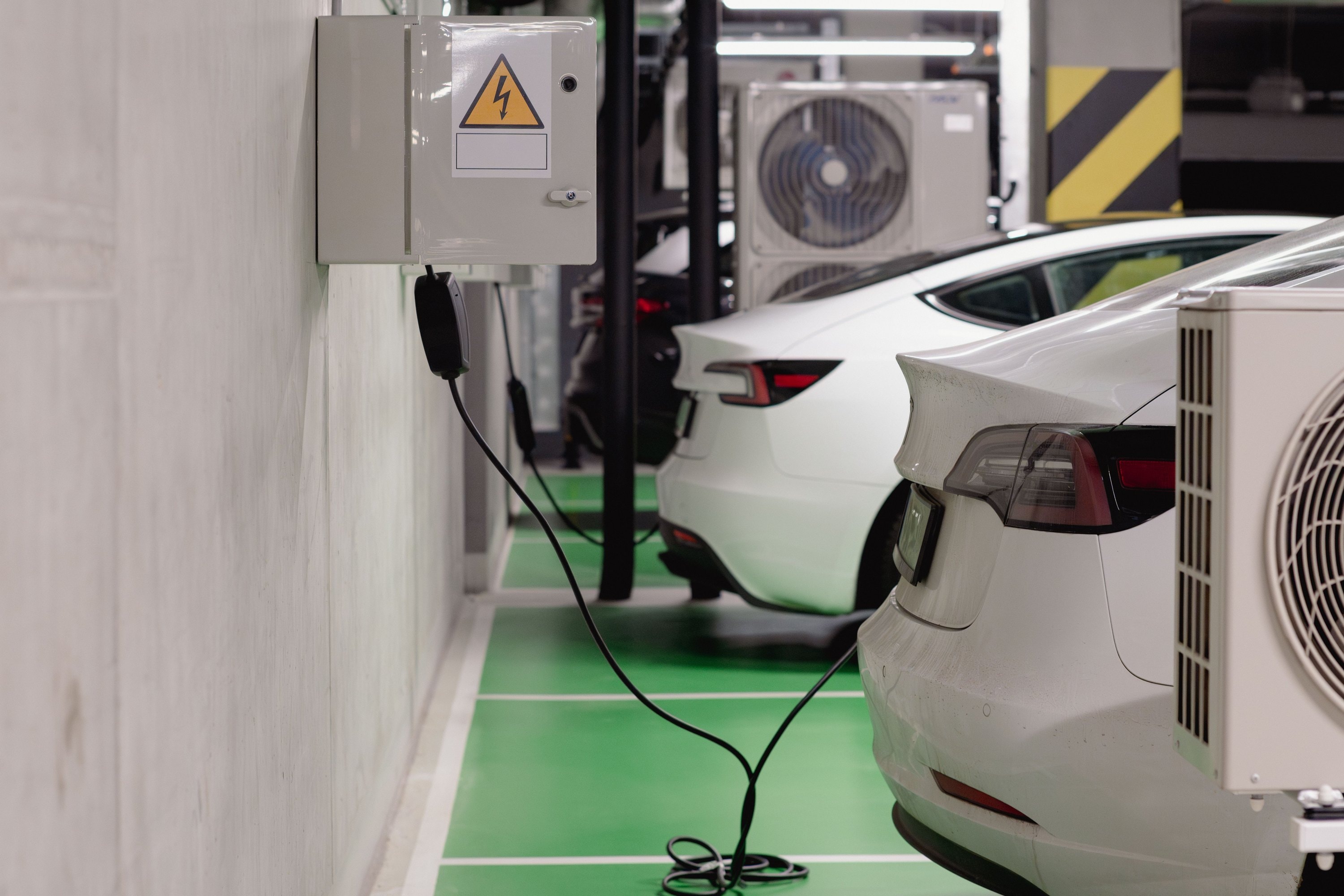 Fot. Jakub Zerdziecki
What is the right EV charger power: 11 or 22 kW? Intuition says the more, the better. In practice, higher power often does not shorten charging at all, because it is limited by the car itself and, in an apartment building, also by the building’s grid connection capacity. We explain how to choose charger power and why 11 kW is more than enough for most sites.
AC charging power is limited by the car’s on-board charger. Most electric cars accept a maximum of 11 kW, and only a handful of models support 22 kW. If you plug a car with an 11 kW on-board charger into a 22 kW charger, it will still charge at 11 kW.
At a consumption of about 18 kWh per 100 km, one hour of charging adds roughly: 3.7 kW — approx. 20 km of range, 7.4 kW — approx. 40 km, 11 kW — approx. 60 km, 22 kW — approx. 120 km (only if the car can accept that power). An 11 kW charger tops up a typical daily mileage of 40–50 km in under an hour.
Indicative figures: the range added per hour of charging depends on the specific car’s energy consumption, the temperature and the battery’s condition.
In an apartment building, what counts is not the power of a single charger but the total. Ten 22 kW chargers theoretically add up to 220 kW, and ten 11 kW chargers to 110 kW. Hardly any residential block has that much spare capacity, and increasing it with the grid operator can be expensive and time-consuming.
That is why dynamic load balancing (DLB) is key. The system shares the available power among the cars that are actually charging at a given moment: when one car is charging, it gets full power; when several are, the power is split between them without exceeding the building’s limit. Because residents charge mainly overnight, over many hours, every car still has a charged battery in the morning.
Charger power should be matched to users’ cars, parking time and the installation’s capabilities — not to the highest number in the catalogue. Our recommendations:
The Domena Power system works with 11 and 22 kW AC chargers that support the OCPP protocol (the open communication standard for chargers), regardless of the manufacturer. It lets you set power limits for a site or a group of chargers, manage the load dynamically and monitor charging peaks, and it bills every session to a specific user — with no commission on energy sales.
We handle the entire process turnkey — see how we can help:
4 min read
4 min read
4 min read
Call or write — we’ll answer your questions about assessment, installation and charger billing. You can also leave an enquiry in the form beside this.