Domena Power
Charging in practice

How to choose an EV charger installation company

4 min readupdated

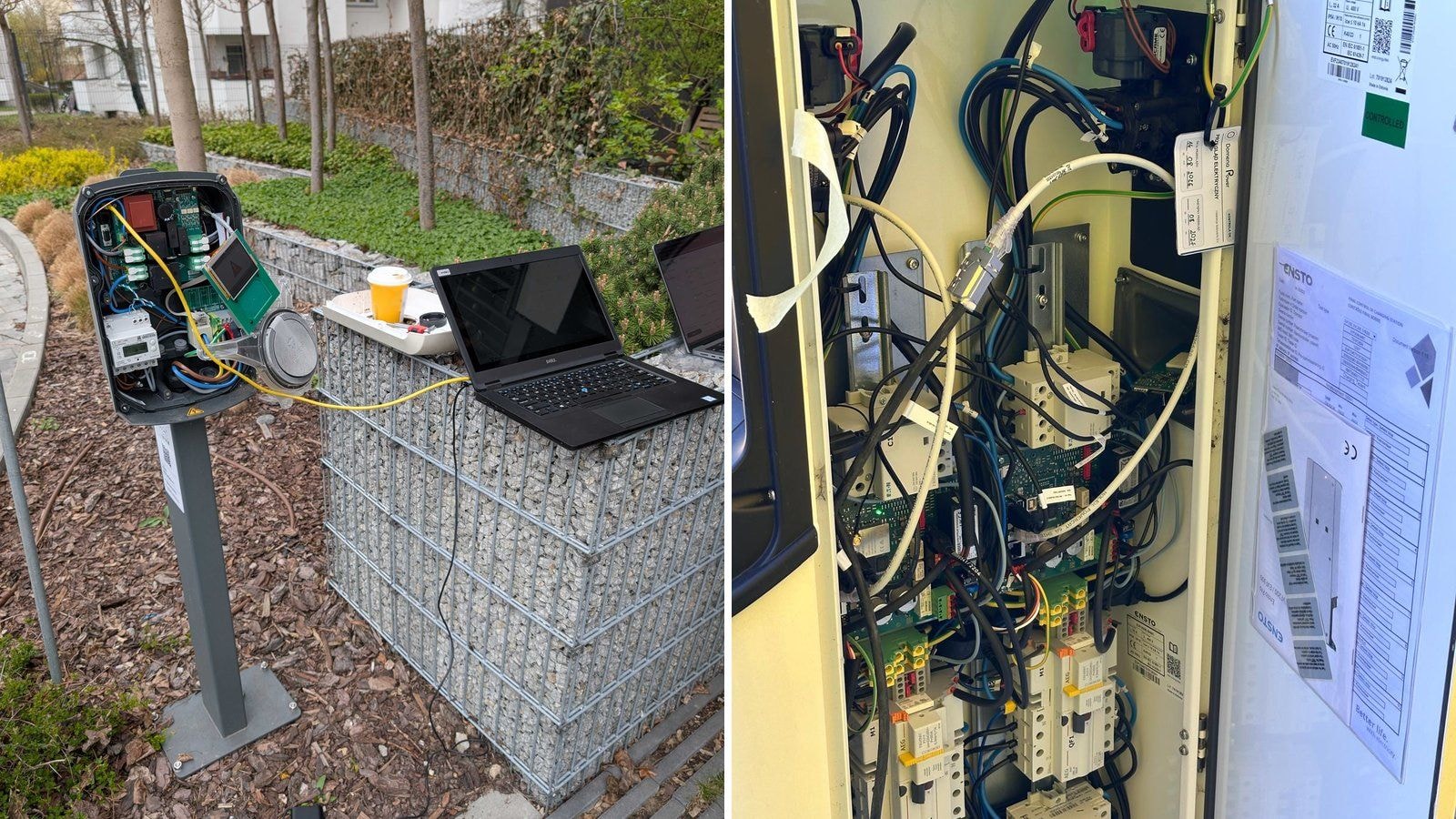
Configuring an EV charger from a service laptop, and the inside of a station with a Domena Power electrical inspection seal

Installing a charging station is more than screwing a device to a wall. The contractor determines whether the installation can handle the load, pass acceptance and run safely for years. Below is a checklist to help you compare quotes and choose a charger installation company with confidence — not just on price.

The contractor’s qualifications and expertise

This is the first thing to ask about — and to request copies of the documents. A reliable company will have no problem showing them.

  • Group 1 qualification certificates (known in Poland as SEP certificates) for operation — for those carrying out installation and testing — and for supervision for the person overseeing the work.
  • A designer holding building design qualifications in electrical installations — when the project requires a design (e.g. several points, an underground car park, a new supply line).
  • Experience with similar sites: a house, a housing community, an office building or a commercial car park — and completed projects you can see or verify.
  • Familiarity with equipment from different manufacturers and, where necessary, manufacturer authorisation, which the device warranty may depend on.
  • Third-party liability insurance covering electrical work.

Site survey and power assessment before the quote

A good quote is based on seeing the site, not “over the phone”. The contractor should check the connection capacity and headroom in the switchboard, the cable route, the mounting location, mobile network coverage and fire-safety requirements. With a larger number of points, they should propose load balancing rather than immediately increasing the connection capacity.

If the power may not be sufficient, an honest contractor will say so plainly and set out the options: an assessment, a change to the connection conditions or dynamic power distribution.

What the quote and contract should include

  • A detailed scope: the device, cables and route, protective devices, building work, configuration, testing and documentation — not a vague “charger installation”.
  • Post-installation testing with a report: protection against electric shock, insulation resistance, earth fault loop impedance, RCD operation.
  • A clear split of formalities: who prepares the design, the fire-safety opinion, the UDT application (when the station is subject to it) and the documents for the housing community or property manager.
  • Completion date, installation warranty and the terms of the device warranty.
  • Confirmation of whether the charger supports the open OCPP protocol — this lets you change the billing system in future without replacing the hardware.

Red flags

  • A quote without a site survey and without questions about the connection or switchboard.
  • No testing and reports in the scope, or “testing at extra cost, if needed”.
  • Downplaying formalities: “you don’t need UDT or fire safety” — without checking how the station will be made available.
  • Single-brand hardware with closed software that ties the site to one operator and its commissions.
  • No after-installation service offer and no clear contact in case of a fault.

One partner or several companies?

The assessment, design, installation, billing system and service can be commissioned from different providers, but then the investor coordinates the scopes and is responsible for the interfaces between them. For housing communities, office buildings or car parks, a single contractor running the whole process usually means less risk and a predictable schedule.

For a simple wallbox installation in a detached house, a trusted, qualified electrician is enough — provided they carry out the tests and hand over the report.

After installation

Ask who responds to faults and how quickly, and whether the contractor offers remote diagnostics, periodic inspections and software updates. A charger works every day for years — support after commissioning is just as important as the installation itself.

Frequently asked questions

  • Those carrying out installation and testing should hold a Group 1 qualification certificate for operation (known in Poland as SEP certificates), and the person supervising — for supervision. If a design is needed, it is prepared by a designer with building design qualifications in electrical installations.

Related services

We handle the entire process turnkey — see how we can help:

Read also

Have a question about charging at your property?

Let’s talk

Let’s talk about working together

Call or write — we’ll answer your questions about assessment, installation and charger billing. You can also leave an enquiry in the form beside this.

I am interested in:

You can select several options.

Provide it if you are enquiring on behalf of a housing community or company. Individual clients can leave it blank.

Leave a number if you prefer a call. Otherwise we will reply by e-mail.

Tell us about the project: type of property, number of charging points, location. It helps us prepare a quote.