Domena Power
Basics and glossary

What is OCPP and why does it matter?

4 min readupdated

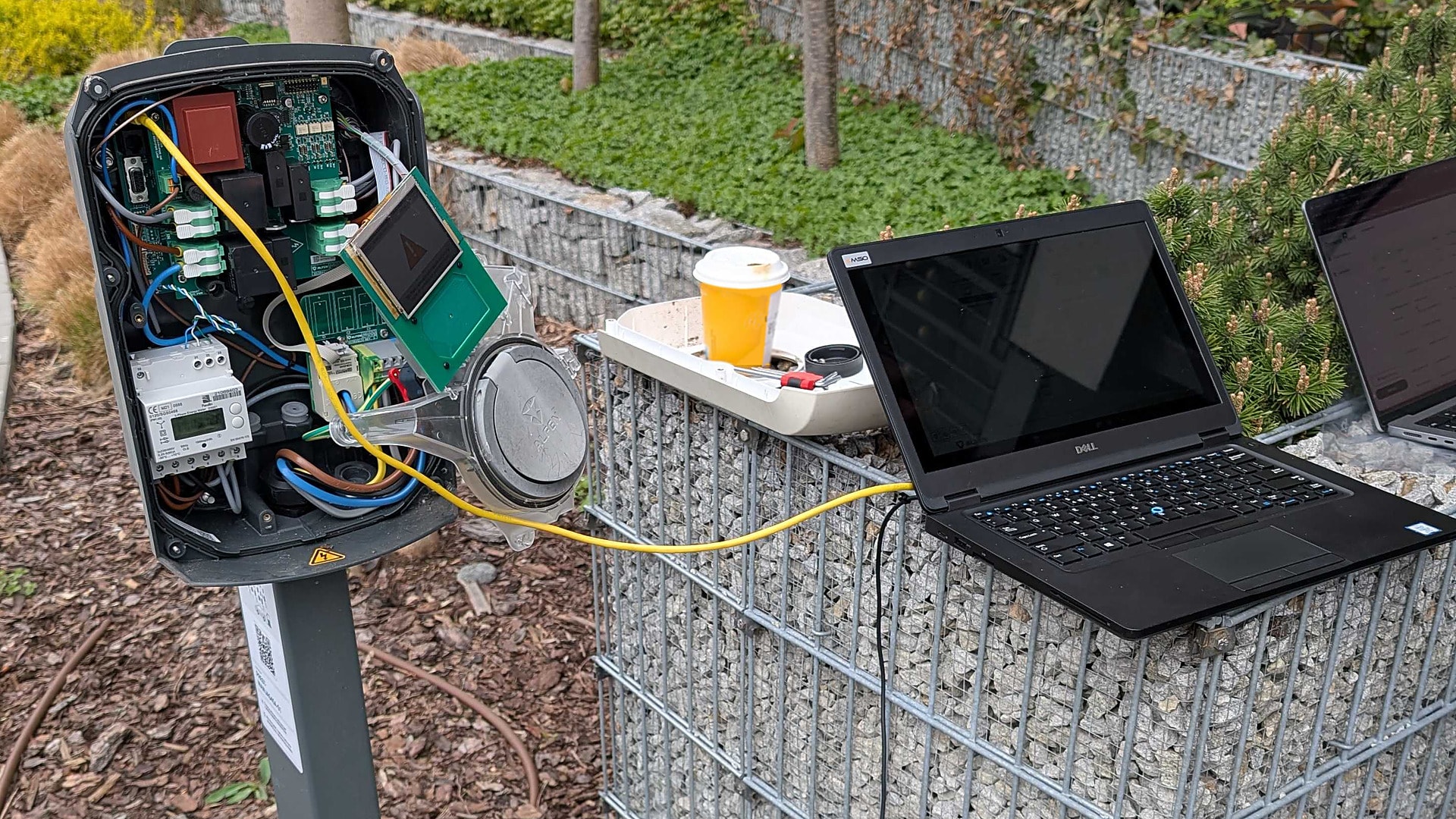
Configuring an EV charger: an open charger connected by a network cable to a service laptop

OCPP (Open Charge Point Protocol) is an open communication standard between a charger and a management system. It sounds technical, but it determines very practical things: whether you can freely choose your chargers, change the billing system without replacing hardware, and manage stations remotely. At Domena Power, OCPP is the foundation on which our system and app run.

What is OCPP?

OCPP is an open protocol developed by the Open Charge Alliance. It defines how a charger (charge point) exchanges information with a management system — known in the industry as a CSMS or simply the backend. The charger connects to the system over the internet: via a network cable, Wi-Fi or a SIM card.

Put simply, OCPP is a common language. If the charger and the system both “speak” OCPP, they can work together, even if they come from different companies.

How a charger talks to the system

  • Registration and status: when switched on, the charger registers with the system, regularly confirms that it is working and reports the status of each connector (available, occupied, faulted).
  • Authorisation: the system checks whether the user — via the app or a card — may start charging.
  • Session and metering: the charger sends the start and end of the session and the energy meter readings, which the system uses to calculate the cost.
  • Remote commands: the system can remotely start or stop charging, restart the charger, unlock a connector or update the firmware.
  • Power management: the system can limit charging power so as not to exceed the building’s connection capacity (smart charging, load balancing).

OCPP versions: 1.6 and 2.0.1

OCPP 1.6 (most often in the 1.6J variant, i.e. with JSON communication) is the version supported by most chargers on the market today. It provides everything needed for authorisation, billing, remote operation and basic power management.

OCPP 2.0.1 is the newer generation: more extensive device management, built-in security mechanisms, better power management and support for the ISO 15118 standard (including Plug & Charge). The versions are not directly compatible with each other, so the charger and the system must support the same version.

OCPP vs OCPI and ISO 15118 — don’t confuse them

  • OCPP: communication between the charger ↔ management system.
  • OCPI: communication between charging operators and service providers, e.g. for roaming at public stations.
  • ISO 15118: communication between the car ↔ charger, e.g. automatic authorisation when the cable is plugged in (Plug & Charge).

What to ask when buying a charger

  • Which OCPP version the charger supports (1.6J, 2.0.1) and whether it has confirmed compliance, e.g. an Open Charge Alliance certificate.
  • Whether you can change the management system address yourself — some chargers are “locked” to the manufacturer’s cloud, which in practice cancels out the benefits of OCPP.
  • Whether it supports power management (smart charging) — important with several or a dozen or more points on one connection.
  • How it behaves without internet: whether it remembers the list of authorised users and sends pending sessions once connectivity is restored.
  • Whether it has a MID meter and sends its readings via OCPP — if energy is to be billed between users.
  • Which connection security features it supports (TLS encryption, authentication) and whether the manufacturer regularly updates the firmware.

OCPP in the Domena Power system and app

Our billing system and app communicate with chargers via OCPP. This lets you choose hardware to suit your site and budget, while managing authorisation, readings, tariffs and billing in one place — regardless of the charger brand. Before deployment, we check whether your existing chargers support OCPP and whether they can be connected to the system, often without replacing any hardware.

  • One app for users and one panel for the property manager — for chargers from different manufacturers.
  • Remote authorisation, monitoring, diagnostics and basic service operations.
  • Consistent billing and reports, with no commission on energy sales.
  • Freedom to change supplier in future — the chargers are not tied to our system.

Frequently asked questions

  • No. It is usually supported by chargers designed for multi-space and commercial sites. Simple home wallboxes often only work with the manufacturer’s app or have no internet connection at all.

Related services

We handle the entire process turnkey — see how we can help:

Sources

Read also

Have a question about charging at your property?

Let’s talk

Let’s talk about working together

Call or write — we’ll answer your questions about assessment, installation and charger billing. You can also leave an enquiry in the form beside this.

I am interested in:

You can select several options.

Provide it if you are enquiring on behalf of a housing community or company. Individual clients can leave it blank.

Leave a number if you prefer a call. Otherwise we will reply by e-mail.

Tell us about the project: type of property, number of charging points, location. It helps us prepare a quote.