Charging station servicing and inspections
4 min read

4 min readupdated
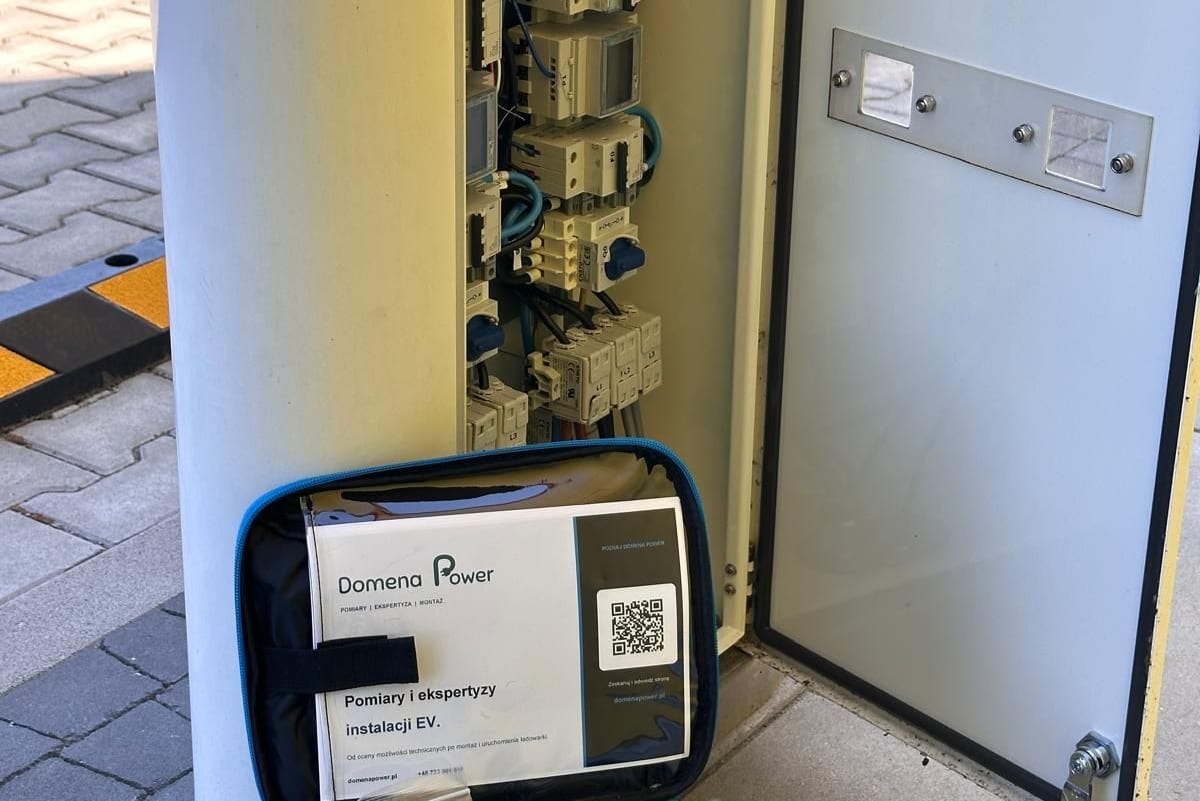
An annual interval for testing protection against electric shock is recommended by good engineering practice. The obligations of the owner of a specific station are set by the regulations and the device’s manual.
Check the effectiveness of protection against electric shock once a year and insulation resistance once every five years. These are the intervals for installations in the open air given by Eligiusz Skrzynecki in “Przewodnik po normach” (Guide to Standards, p. 27). He describes them as recommendations of good engineering practice. He also points out what the frequency of testing should depend on: the type of installation, how it is used, how it is maintained and the external conditions.
For the owner of a charger in an uncovered car park, this is a starting point. Simply ordering an “annual inspection”, however, is too vague. You need to establish what exactly is to be checked.
The lack of a roof does not set one interval for all measurements.
For stations covered by the regulation of the Minister of Energy of 26 June 2019, the schedule follows from the operating manual. Under § 13, maintenance, service inspections and measurements must be carried out in accordance with it. Under § 22, the service manual must state the intervals and scope of the checks.
The GARO LS4 documentation is unambiguous on this. The manual dated 4 August 2020, point 7.2, requires annual measurements labelled B1-B5, covering among other things the protective conductors, insulation and protection against electric shock. Once they are done, a test report must be drawn up. The owner of a station covered by this manual has a specific interval and scope of work, with no need to derive them from general recommendations for open-air installations.
Once the measurement deadline has passed, the station must be taken out of service. This is what § 7 of the regulation provides. Under § 3, the test reports must be up to date. The fact that the car still charges is no substitute for test results.
The Construction Law is sometimes cited to justify the rule “outdoors, so every year”. Its Article 62 does indeed provide for an annual check of those elements of buildings, structures and installations that are exposed to harmful weather effects. The same article, however, contains an exemption covering the structures referred to in Article 29(1) and (2). These include charging stations, listed in Article 29(1)(25), except for charging infrastructure for public road transport. For a station in this category, exposure to the weather therefore does not trigger an annual check on this basis. Where the device is part of a larger structure, you need to establish the scope of inspection for that structure.
The statutory five-year interval for testing the electrical installation does not extend a shorter interval set in the station’s manual.
An inspection by the Office of Technical Inspection (UDT) follows yet another procedure. Article 16 of the Electromobility Act provides for it before the station is put into operation and after a repair, modernisation or relocation of the charging point. The exception is work consisting solely of replacing parts with parts that have the same parameters and characteristics or that meet the manufacturer’s requirements. The lack of a roof does not give rise to an annual UDT inspection. Periodic measurements by an electrician and a UDT inspection are two different things.
When drawing up the schedule, you also need to distinguish servicing from measurements. An entry reading “service once a year” does not, by itself, define the full scope of electrical testing. The manual may treat these tasks separately. If it does not give the measurement intervals, you should obtain supplementary information from the manufacturer or its authorised representative. Stating these intervals is required by § 22(3)(3) of the regulation.
Before booking the next job, it is worth putting the manual for the relevant model side by side with the latest test report. Then send the contractor a specific question: which measurements are due now for this station, and on what basis was their deadline set?
We handle the entire process turnkey — see how we can help:
4 min read
4 min read
4 min read